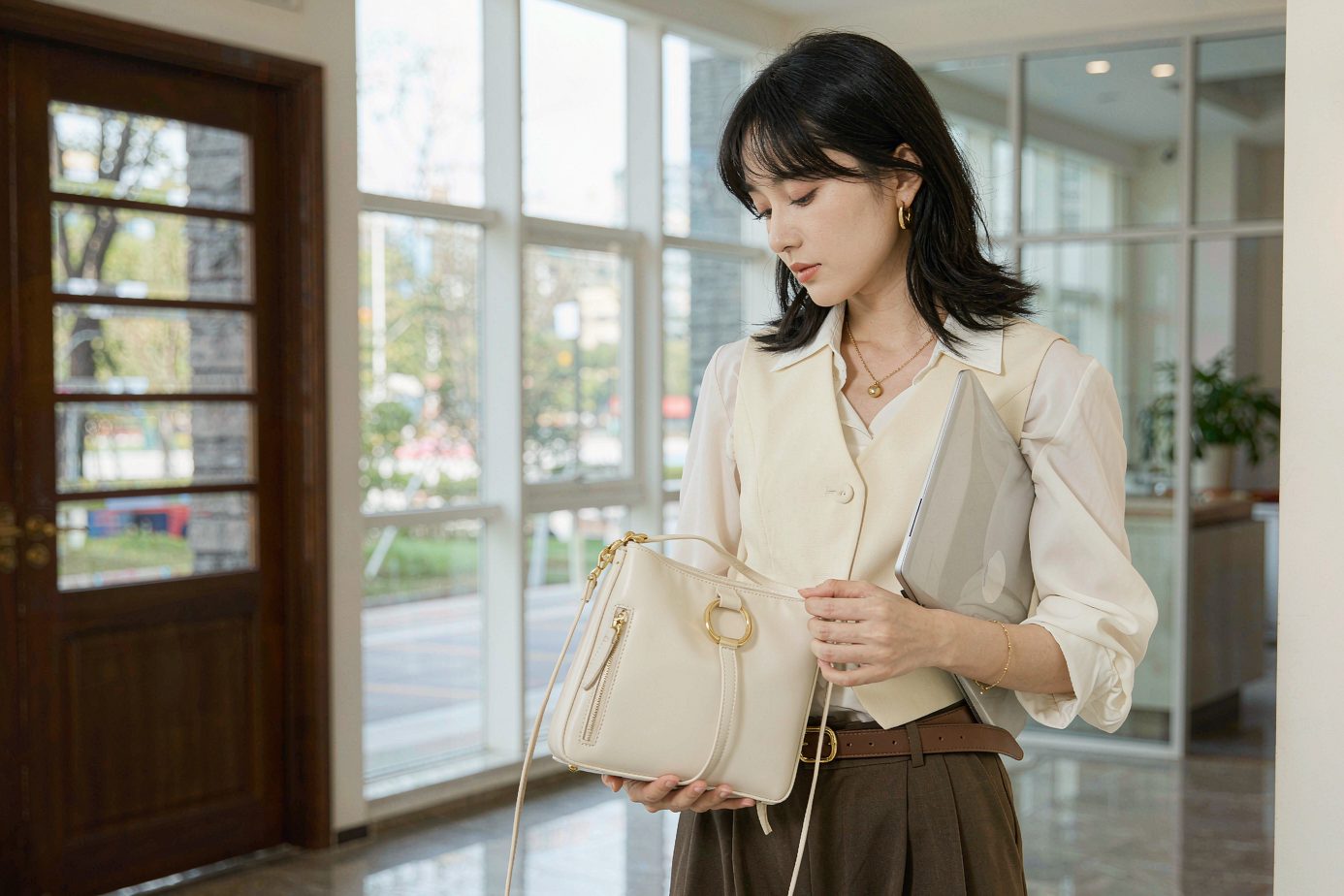
In a humid climate, the bag enemy is not dust — it is mold. Leather and canvas both grow it when air cannot move and moisture is trapped.
Airflow Beats Sealing
Do not seal bags in plastic in a damp climate — plastic traps moisture and grows mold. A canvas and leather bag needs a breathable dust bag. The crossbodies in canvas are the most vulnerable.
Stuff, But With the Right Thing
Acid-free tissue holds shape and wicks a little moisture; newspaper ink can transfer. A structured crossbody keeps its shape when stuffed. The handbags in smooth leather crease if stored flat and empty.
Desiccant and a Monthly Check
Silica packets in the shelf, and open every bag monthly. A leather bucket bag stored closed for a season in humidity can surprise you.
The Rule
Pro tip: humid climate = breathable dust bag, acid-free stuffing, silica nearby, and a monthly look inside. Never plastic, never a sealed box.
Store the leather handbags well.
Frequently Asked Questions
How do I stop mold on bags in a humid climate?
Give bags airflow with breathable dust bags, use silica gel nearby, and check them monthly. Never store leather sealed in plastic in humidity.
What should I stuff bags with?
Acid-free tissue paper or a soft cotton pillow. Avoid newspaper — the ink can transfer onto light linings.
Can mold on a leather bag be removed?
Light surface mold can be wiped with a damp cloth and dried thoroughly, then conditioned. Deep mold that has stained the leather usually needs a professional.