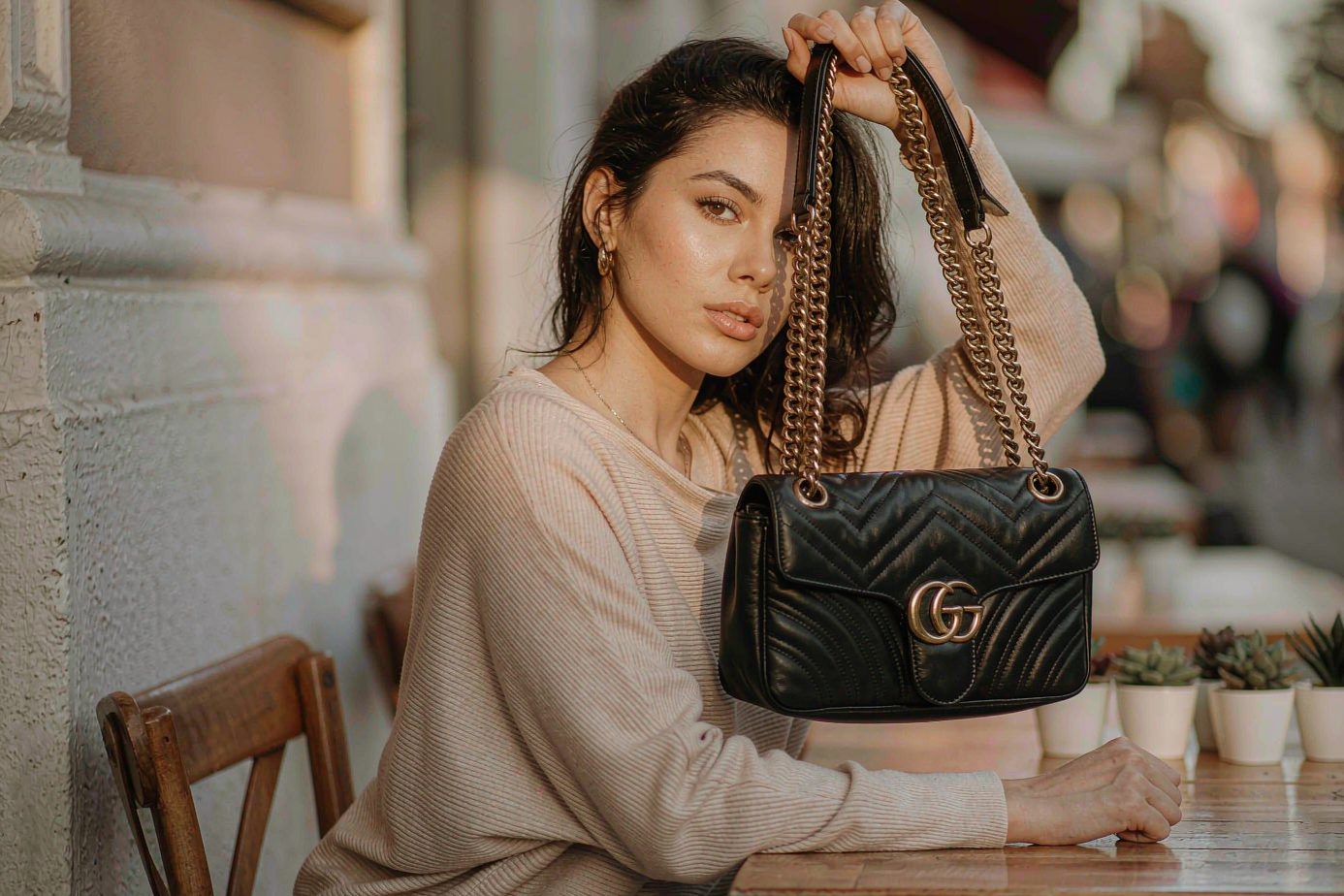
A good fake fools the eye at a glance; it fails under a 30-second inspection. If you are buying secondhand or just curious what "real" looks like, these seven checks are the field test.
1. Stitching
Real luxury stitching is even, tight, and angled at consistent 45° — never loose or wandering. The ruched gold-handle shoulder bag shows the kind of clean, uniform stitch our workshop holds as the standard.
2. Hardware Weight
Real zippers and clasps feel dense and cold; fakes are light pot-metal that tarnishes fast. Pull the zip — it should glide, not catch.
3. The Other Five
Pro tip: smell the leather (real has a warm hide scent, not plastic), check lining seams, measure logo letter-spacing, verify the date/stamp code format, and trust a price that is "too good." A bag at 20% of retail is almost always a fake.
When in doubt, buy from a maker that shows the stitch and the hardware openly — like the JINMAN handbag line, where every seam is the proof.
Frequently Asked Questions
How can you tell if a designer bag is real?
Check seven things: even 45° stitching, dense cold hardware that zips smoothly, a warm leather (not plastic) smell, clean lining seams, correct logo spacing, a valid date/stamp code, and a price in line with retail. Fakes fail at least one.
What is the fastest fake-designer-bag tell?
Price and hardware. A bag at a fraction of retail is the biggest red flag, and light, tarnishing zippers almost never appear on a genuine luxury piece.
Can a fake look perfect in photos?
Yes — photos hide stitching gaps, hardware weight, and smell. Always inspect in hand or buy from a seller who shows macro shots of the seam and the stamp.